
House Training Classes for Puppies
House training your puppy is an essential part of their development and a key aspect of responsible pet ownership. Attending house training classes can greatly benefit both you and your furry companion.
These classes are designed to teach puppies the appropriate behaviours and skills needed to become well-mannered and house-trained pets. Trainers focus on positive reinforcement techniques to encourage good habits and discourage unwanted behaviours.
During house training classes, puppies learn how to signal when they need to go outside, establish a routine for feeding and bathroom breaks, and understand basic commands related to toileting. Trainers also provide guidance on crate training, which can be a useful tool in housebreaking.
Moreover, attending these classes allows owners to learn effective communication strategies with their puppies, build a strong bond based on trust and respect, and gain valuable insights into their pet’s behaviour.
By enrolling your puppy in house training classes, you are investing in their well-being and setting them up for a lifetime of good behaviour. Remember that patience, consistency, and positive reinforcement are key elements in successful house training.
If you’re considering house training classes for your puppy, contact us today to find out more information about our programmes. Together, we can help your puppy become a happy, well-adjusted member of your family.
Benefits of Puppy Training Classes: Expert Guidance, Socialisation, and Strengthening Bonds
- Professional guidance from experienced trainers
- Structured learning environment for puppies
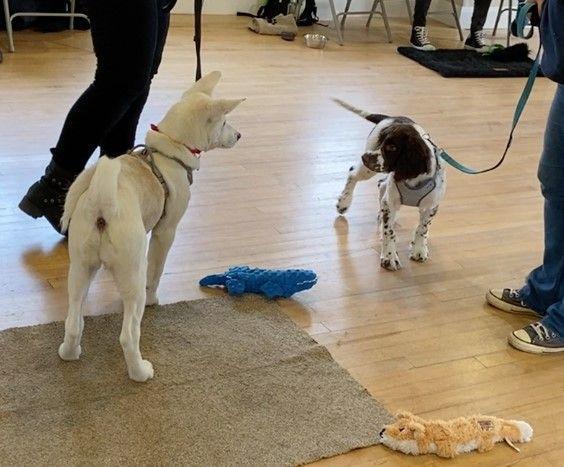
- Socialisation opportunities with other dogs and people
- Effective positive reinforcement techniques used
- Owners learn valuable communication skills with their pets
- Establishes a consistent routine for the puppy’s development
- Promotes responsible pet ownership and strengthens the bond between owner and puppy
Considerations and Challenges of Enrolling Puppies in House Training Classes
- Costly investment for some pet owners
- Time-consuming, requiring regular attendance and practice
- Not all puppies may respond well to group training environments
- Potential for the spread of illnesses in a class setting
- Limited individual attention due to group dynamics
- Training methods may not align with personal beliefs or preferences
Professional guidance from experienced trainers
Professional guidance from experienced trainers is a significant advantage of attending house training classes for puppies. These trainers have a wealth of knowledge and expertise in animal behaviour and training techniques, allowing them to provide tailored advice and support to help puppy owners navigate the challenges of house training effectively. Their insights can help owners understand their puppy’s needs better, address specific behavioural issues, and implement training strategies that are proven to be successful. With professional guidance, puppy owners can feel confident in their approach to house training and ensure that their furry companions receive the best possible care and education.
Structured learning environment for puppies
House training classes for puppies provide a structured learning environment that is crucial for their development. In these classes, puppies are introduced to a consistent routine and clear expectations, which helps them understand boundaries and build good habits. The structured setting allows trainers to focus on specific skills and behaviours in a systematic way, making it easier for puppies to learn and retain information. This environment also provides socialisation opportunities with other puppies, helping them develop important social skills and confidence. Overall, the structured learning environment of house training classes sets puppies up for success by laying a strong foundation for their ongoing training and behaviour.
Socialisation opportunities with other dogs and people
House training classes for puppies offer valuable socialisation opportunities with other dogs and people, which are crucial for their overall development. Interacting with different dogs helps puppies learn appropriate social skills, communication cues, and body language interpretation. Similarly, exposure to various people helps them become more comfortable and confident in different environments. These interactions play a significant role in shaping a puppy’s behaviour and temperament, fostering positive relationships with both canine companions and humans. Through these experiences, puppies can grow into well-adjusted, sociable pets who can navigate the world with ease and confidence.
Effective positive reinforcement techniques used
One significant benefit of house training classes for puppies is the use of effective positive reinforcement techniques. Trainers in these classes focus on rewarding desired behaviours with praise, treats, or toys, which encourages puppies to repeat those behaviours. By employing positive reinforcement, puppies learn in a supportive and encouraging environment, leading to quicker and more lasting results. This approach not only helps in house training but also fosters a strong bond between the owner and their puppy based on trust, respect, and mutual understanding.
Owners learn valuable communication skills with their pets
House training classes for puppies offer a valuable pro in that owners have the opportunity to learn essential communication skills with their pets. By understanding how to effectively communicate with their puppy, owners can establish a strong bond built on trust and mutual understanding. Through positive reinforcement techniques taught in these classes, owners can learn how to convey their expectations clearly and encourage desired behaviours in their furry companions. This improved communication not only enhances the training process but also fosters a deeper connection between owner and pet, leading to a harmonious and fulfilling relationship for years to come.
Establishes a consistent routine for the puppy’s development
House training classes for puppies offer the significant benefit of establishing a consistent routine for the puppy’s development. Consistency is key in shaping a puppy’s behaviour and helping them understand what is expected of them. By following a structured routine introduced in these classes, puppies learn when to eat, play, rest, and go outside for bathroom breaks. This predictable schedule not only aids in house training but also contributes to the overall well-being and stability of the puppy, setting a strong foundation for their growth and development.
Promotes responsible pet ownership and strengthens the bond between owner and puppy
House training classes for puppies offer a valuable pro by promoting responsible pet ownership and strengthening the bond between owner and puppy. By attending these classes, owners learn essential skills and techniques to properly care for their furry companions, ensuring their well-being and happiness. Through positive reinforcement training methods, owners can establish a strong bond of trust and communication with their puppies, fostering a harmonious relationship based on mutual understanding. This not only enhances the overall quality of life for both owner and puppy but also sets a solid foundation for a lifelong companionship built on love and respect.
Costly investment for some pet owners
For some pet owners, one significant drawback of house training classes for puppies is the cost involved. Attending these classes can be a costly investment, especially for those on a tight budget or facing financial constraints. The expenses associated with enrolling in professional training programmes, purchasing necessary supplies, and potentially hiring a trainer can pose a challenge for some individuals. This financial burden may deter certain pet owners from accessing valuable resources and guidance that could benefit their puppy’s development and behaviour. It is essential to consider the financial implications carefully and explore alternative options or resources to ensure that all puppies have access to adequate training and support, regardless of their owner’s financial situation.
Time-consuming, requiring regular attendance and practice
One significant drawback of house training classes for puppies is the time commitment involved. These classes demand regular attendance and consistent practice to achieve desired results. Pet owners must dedicate a significant amount of time to attend classes, participate in training sessions, and reinforce learning at home. The demanding schedule can be challenging for individuals with busy lifestyles or conflicting commitments, making it difficult to maintain the necessary consistency in training. Additionally, the need for ongoing practice and reinforcement outside of class hours can be overwhelming for some owners, leading to frustration and potential setbacks in the training process.
Not all puppies may respond well to group training environments
Not all puppies may respond well to group training environments, as each puppy has its own unique personality and learning style. Some puppies may feel overwhelmed or distracted in a group setting, making it challenging for them to focus on training tasks. Additionally, timid or anxious puppies may find group classes intimidating, hindering their ability to learn effectively. In such cases, individualised or private training sessions may be more suitable to cater to the specific needs of these puppies and ensure a positive learning experience. It’s important for pet owners to consider their puppy’s temperament and comfort level when deciding on the most appropriate training environment for their furry companion.
Potential for the spread of illnesses in a class setting
One significant con of house training classes for puppies is the potential for the spread of illnesses in a class setting. Puppies are more susceptible to contagious diseases, such as parvovirus and kennel cough, especially in environments where they come into contact with other dogs. Despite measures taken to ensure cleanliness and vaccination requirements, the close proximity of multiple puppies in a class setting increases the risk of disease transmission. Owners must be cautious and vigilant about their puppy’s health when considering enrolling them in house training classes to prevent the spread of illnesses among the canine participants.
Limited individual attention due to group dynamics
One potential drawback of house training classes for puppies is the limited individual attention that each puppy may receive due to the group dynamics. In a class setting, trainers have to divide their time and focus among multiple puppies, which can result in less personalised guidance for each individual. Some puppies may require more attention or have specific behavioural issues that could be overlooked in a group setting. This limitation in individualised attention could potentially hinder the progress of certain puppies in mastering house training skills effectively.
Training methods may not align with personal beliefs or preferences
One potential drawback of house training classes for puppies is that the training methods employed may not always align with an individual’s personal beliefs or preferences. Some owners may have specific philosophies or approaches to training that differ from those used in a group class setting. This discrepancy can lead to feelings of discomfort or unease, making it challenging for owners to fully engage in the training process. It’s essential for pet owners to research and choose a training programme that resonates with their values and goals to ensure a positive and effective learning experience for both them and their puppies.