
Organic SEO Services: A Guide to Sustainable Search Visibility
When people need a product, service or answer, they often begin with a search engine. Organic SEO services help businesses appear in relevant, unpaid search results by improving their website, content and online presence. Unlike paid advertising, organic search visibility is earned rather than bought—although it takes time, expertise and ongoing work to build.
This guide explains what organic SEO services include, how they can support a business and what to look for when choosing an SEO provider.
What are organic SEO services?
Organic SEO services are activities designed to help a website rank more prominently in the natural results on search engines such as Google. The aim is to attract people who are already looking for information, products or services related to a business.
SEO does not guarantee a particular position or a set number of visitors. Search algorithms and competitors change, and results take time. A sound strategy focuses on making a website useful, accessible and relevant to its intended audience—not on short-term tricks.
What do organic SEO services include?
SEO strategy and research
A campaign usually begins with understanding the business, its customers and its goals. SEO specialists may research search terms, competitors and the questions potential customers ask. This helps identify opportunities that are relevant to the business, rather than simply targeting phrases with high search volumes.
Technical SEO
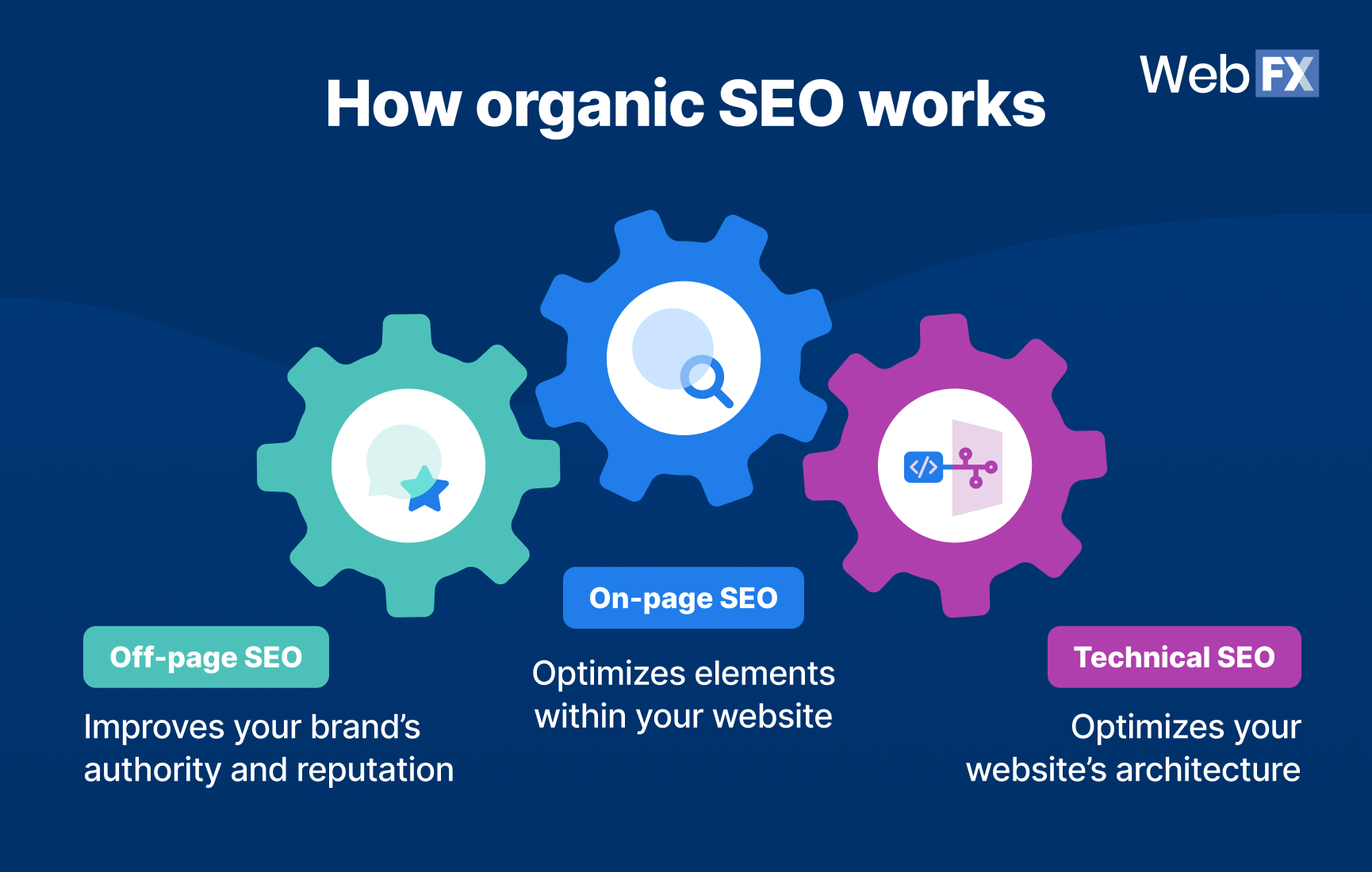
Technical SEO focuses on how well search engines can access, understand and index a website. Work may include reviewing site structure, page loading performance, mobile usability, broken links, duplicate pages and redirects. Technical improvements can also make a site easier and more pleasant for visitors to use.
On-page optimisation
On-page SEO improves individual pages so their purpose is clear to both users and search engines. This can involve refining page titles and headings, improving internal links, organising content and making sure important information is easy to find. Changes should read naturally and help visitors, rather than forcing search terms into every paragraph.
Content planning and creation
Useful, original content can answer customer questions and demonstrate a business’s knowledge. An SEO provider may help plan new pages, improve existing copy or develop articles, guides and FAQs. Good content should be accurate, clear and written for people first. It should also be maintained as products, services and information change.
Local SEO
For businesses serving a particular area, local SEO can help improve visibility in location-based searches. This may include optimising a Google Business Profile, checking business details across online directories and creating helpful location-specific website pages. Accurate contact details and genuine customer reviews can also support trust.
Measurement and reporting
Reporting helps businesses understand what is changing and where further work may be useful. Useful measures can include organic traffic, search visibility, enquiries, sales and engagement with key pages. Reports should explain the results in plain language and connect activity to business objectives—not rely on rankings alone.
Why invest in organic SEO?
- Reach people with relevant intent: Search visitors may already be researching a need or comparing possible solutions.
- Build lasting visibility: Well-maintained pages can continue attracting visitors over time, although performance is never guaranteed.
- Improve the website experience: SEO work often addresses usability, accessibility, content organisation and site performance.
- Support other marketing: Search insights can inform content, product development and wider marketing activity.
- Build credibility: Clear, helpful information can give potential customers greater confidence in a business.
Organic SEO and paid search: what is the difference?
Paid search places adverts in search results in exchange for a fee, commonly based on clicks or impressions. Organic SEO aims to improve a website’s position in unpaid results. Paid campaigns can start generating visibility quickly while they are running; SEO generally requires a longer-term investment and does not provide instant results.
The approaches can work together. Paid search may help test messaging or reach customers during a campaign, while SEO can build a broader foundation of useful content and organic visibility over time.
How long does SEO take?
There is no universal timescale. Results depend on factors such as the website’s current condition, the competitiveness of its market, the quality of existing content and the resources available to make improvements. Some changes may be noticed sooner than others, but meaningful progress often takes several months or longer.
A responsible provider should set realistic expectations, explain what will be done and review progress regularly. Be cautious of anyone promising guaranteed rankings or overnight results.
Choosing an organic SEO provider
Before hiring an SEO agency or consultant, consider the following:
- Clear recommendations: Can they explain their approach in terms you understand?
- Relevant experience: Do they understand your type of business, audience or market?
- Ethical methods: Do they focus on useful content and sustainable improvements rather than manipulative tactics?
- Transparent reporting: Will you be able to see what work has been completed and what the results mean?
- Realistic expectations: Do they acknowledge that rankings and outcomes cannot be guaranteed?
- Business alignment: Are their priorities tied to your goals, such as qualified enquiries or online sales?
A long-term approach to organic growth
Organic SEO is not a one-off task. Search behaviour, competitors and websites change, so effective strategies need regular attention. The strongest results come from combining technical foundations with relevant content, a positive user experience and clear measurement.
For businesses prepared to invest consistently, organic SEO services can help make a website easier to find and more useful to the people it aims to serve. The first step is to understand the site’s current performance, identify practical opportunities and build a plan around meaningful business goals.
9 Tips for Choosing and Getting the Most from Organic SEO Services
- Choose an organic SEO service with proven results.
- Set clear goals before work begins.
- Prioritise helpful, original content.
- Research keywords your audience uses.
- Improve page speed and mobile usability.
- Earn links from reputable websites.
- Track rankings, traffic and conversions.
- Ask for regular, transparent reports.
- Avoid providers promising instant results.
Choose an organic SEO service with proven results.
Choose an organic SEO service with proven results by asking for relevant case studies, client references and examples of measurable improvements. Look beyond ranking increases alone: a strong provider should explain how its work has helped businesses attract qualified visitors, enquiries or sales. Check that the examples relate to goals similar to yours, and ask how results were measured and over what period. No SEO provider can guarantee specific rankings, so favour clear evidence, transparent reporting and realistic expectations over bold promises.
Set clear goals before work begins.
Before starting organic SEO work, set clear goals so everyone understands what success looks like. Rather than focusing only on higher rankings or more website traffic, identify outcomes that matter to your business, such as increasing relevant enquiries, growing online sales or attracting more local customers. Clear goals help shape the strategy, guide priorities and make it easier to measure progress over time.
Prioritise helpful, original content.
Prioritise helpful, original content that answers your audience’s questions clearly and accurately. Focus on sharing genuine expertise and practical information, rather than rewriting what other websites have already published or adding keywords for their own sake. Well-crafted content can make your site more useful to visitors, build trust in your business and support organic SEO by helping search engines understand which topics your pages cover.
Research keywords your audience uses.
Researching the keywords your audience uses helps you understand how they search for information, products or services like yours. Look beyond broad, high-volume terms to include specific phrases and questions that reflect genuine needs and intent. Keyword research tools, search suggestions, customer enquiries and sales conversations can all reveal useful insights. Use these findings to shape clear, helpful website content, while keeping the language natural—keywords should guide your content, not make it awkward to read.
Improve page speed and mobile usability.
Improving page speed and mobile usability can make a website easier to use and support organic SEO performance. Pages that load quickly help visitors find information without unnecessary delays, while a mobile-friendly layout makes content, navigation and buttons easier to use on smaller screens. Check your site regularly on different devices, compress large images, remove unnecessary scripts and fix usability issues such as text that is difficult to read or links that are hard to tap. These improvements can create a smoother experience for visitors and help search engines understand that your site is well maintained.
Earn links from reputable websites.
Earn links from reputable websites by creating useful, trustworthy content that others genuinely want to reference. Relevant links can help people discover your site and may signal to search engines that your content is worth exploring. Focus on building relationships with credible organisations, industry publications and local partners, and avoid buying links or using schemes designed to manipulate rankings. Quality and relevance matter more than the number of links.
Track rankings, traffic and conversions.
Track rankings, organic traffic and conversions to understand whether your SEO work is making a meaningful difference. Rankings show how your pages perform for relevant searches, while traffic reveals whether more people are finding your website. Conversions—such as enquiries, bookings or sales—show whether those visits are helping meet your business goals. Review these measures regularly, alongside changes to your website and marketing activity, so you can spot trends, learn what is working and adjust your strategy where needed.
Ask for regular, transparent reports.
Ask your organic SEO provider for regular, transparent reports that clearly show what work has been completed and how your website is performing. Reports should explain useful measures—such as organic visits, relevant enquiries, conversions and changes in search visibility—in plain English, with context about what the figures mean. This makes it easier to see progress, spot areas that need attention and check that the work supports your business goals.
Avoid providers promising instant results.
Be cautious of organic SEO providers promising instant results or guaranteed top rankings. Search visibility takes time to build and depends on factors such as your website, competition and ongoing search engine changes. A reputable provider will set realistic expectations, explain the work involved and focus on sustainable improvements rather than quick fixes that could put your website at risk.